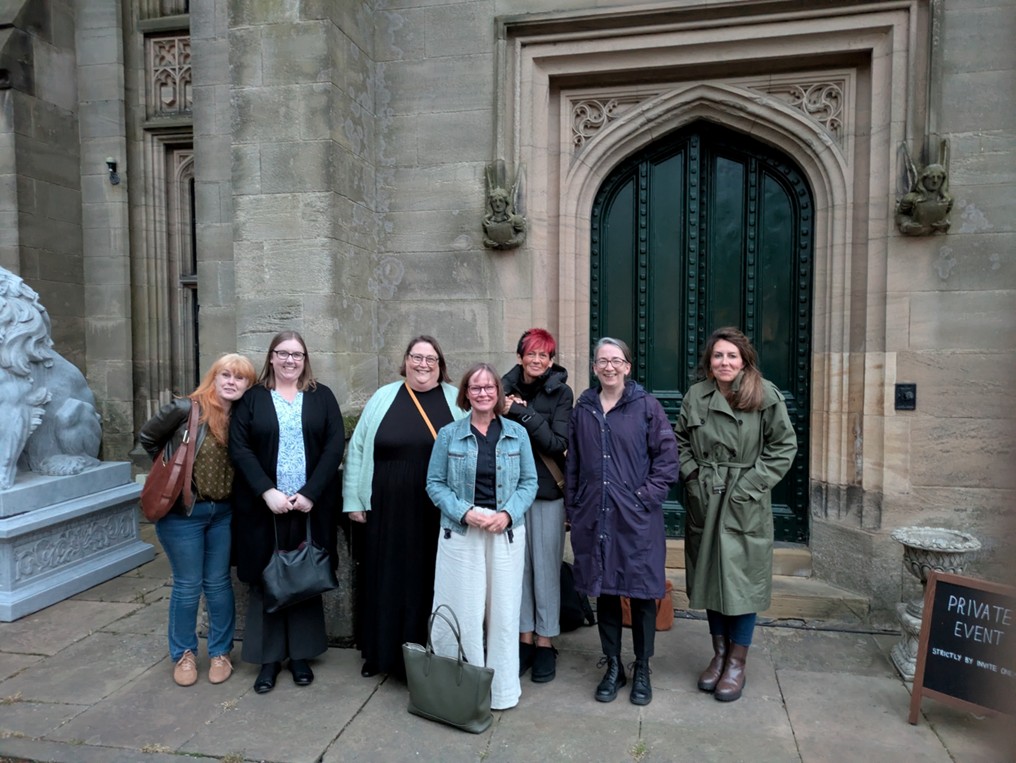
The 2025–26 Greater Lincolnshire RE community of practice met in person for the second time on Wednesday 6th May. Seven participants attended, including two primary RE leaders and four secondary heads of department from across the region met at The Sessions House in Spalding and shared a three-course meal.
Before the meeting, Gillian Georgiou shared an article by Professor James Holt on education and freedom of religion or belief legislation. The article shaped much of our discussion.
All participants reported rising parental complaints about RE or growing concern from senior leaders about possible complaints. We explored the tension between teaching pupils about different worldviews and wider social trends towards separation and segregation between communities.
The group discussed challenges we have faced in the classroom and agreed that pupils need safe spaces to ask questions and discuss difficult issues. Several teachers felt these opportunities are becoming less common. In some cases, schools now avoid certain topics altogether. We also discussed organisations such as Solutions Not Sides, which help schools manage difficult conversations in RE lessons.
The tension between parental rights to withdraw children from RE and children’s rights to explore their own beliefs through learning about different worldviews were also explored. We considered what might happen if a pupil legally challenged a parent’s decision to withdraw them from RE. No such legal case currently exists. However, many teachers noted that most withdrawn pupils would prefer to attend RE lessons.
We also reflected on the wider political and social pressures affecting RE. Participants noted the growing influence of groups linked to religious, cultural, and belief identities. Some groups actively challenge schools over their RE curriculum. This creates real pressures for teachers and school leaders.
As the evening continued, we discussed who RE should serve most urgently in our region. While pupils often engage positively with RE, we felt the wider community may now be the key audience. Teachers usually connect with this audience through parents. Many parents hold fixed views about RE and different belief communities. These views may come from personal experience or limited understanding. Social media and news platforms often intensify these opinions.
The group began exploring what “RE for grown-ups” might look like. We discussed possible formats, practical approaches, and ways to reach parents most likely to withdraw children from RE. We agreed that strong parental support is essential for effective RE teaching. Without it, teaching the subject becomes much harder.
We plan to continue this discussion at our next meeting in July.
Finally, we thanked the Trustees for their generous support. We value the opportunity to meet, share experiences, and explore future developments in RE together.
Gillian Georgiou